Why Was My Roof Insurance Claim Denied?
You filed a roof insurance claim expecting to get help repairing the damage caused by a recent storm. But now,
 Skip to content
Did you know homeowners in Coastal South Carolina may qualify for up to $7,500 toward a new roof and other exterior home improvements? These grants are awarded several times each year through the South Carolina Safe Home Mitigation Grant Program and have already helped countless local residents upgrade their roofs while better preparing their properties for future storm seasons.
We’ll explain how the program works, who is eligible, and what the application process is like below.

The South Carolina Safe Home Mitigation Grant Program is a state-funded initiative designed to help coastal homeowners protect their houses from hurricane and high-wind damage.
Administered by the South Carolina Department of Insurance, this program provides financial grants to help homeowners afford specific upgrades that’ll make their homes more resistant to storms. There are a few different kinds of grants available under the program, with most relating to fortifying or strengthening roofs, windows, and doors.
But it is important to note that this program is for proactive mitigation steps — you can’t use it to pay for damage that’s already occurred, nor can you use it to pay for general remodeling projects. It’s specifically designed to incentivize homeowners to address problems before they occur.
The program periodically opens application windows (typically twice a year) to accept new grant applications. Funds are limited each cycle, so grants are awarded on a first-come, first-served basis until that round’s funding is exhausted. For example, a recent funding round had about $1.1 million available, which was enough to fund more than 300 home retrofit projects along the coast.
Homeowners in eligible areas can apply online. If approved, you receive a grant award that helps pay for approved upgrades to fortify your home against windstorms. Thanks to our seaside location, the entire Charleston area (though not all individual homes within the area) is eligible for this program, as are other coastal regions of South Carolina.



Not every homeowner or property qualifies for these grants. In fact, there are specific eligibility requirements imposed by the program to ensure the funds flow to the intended recipients.
To be eligible for a grant, you and your home must meet all of the following criteria:
These include Beaufort, Berkeley, Charleston, Colleton, Dorchester, Florence, Georgetown, Horry, Jasper, Marion, and Williamsburg counties.
The property must be your primary residence that you own and live in; it can’t be a rental, second home, or investment property. Additionally, it is only awarded to single-family dwellings. Condos, apartments, duplexes, and multi-family buildings do not qualify.
Your home can only receive this grant once; if you’ve previously been awarded a Safe Home Mitigation Grant for your house in the past, your home (but not you) is ineligible for additional grants.
This program is for preventive upgrades, so the home must not have existing damage. You need a roof in serviceable condition; the grant won’t pay to repair current damage, only to reinforce the structure against future storms.
The inspection will be performed by a certified wind inspector who assesses your home’s current wind vulnerabilities. The inspector will provide the detailed report and photographs required for your application.
Not sure if your home is eligible? Willow Ash Roofing is here to help! Call or email us today for a consultation!

It’s important to note that, unlike some other grant programs, there is no income cap associated with this grant. Homeowners of all income levels can qualify.
However, the program does involve a means test (which compares your adjusted gross income to the median income of the area) to determine the type of grant you might receive. Specifically, the means test will determine whether you are eligible for a matching or non-matching grant.
Generally speaking, lower-income applicants may receive a non-matching grant. This means they receive the full grant amount without having to pay anything out of pocket. On the other hand, higher-income applicants may be offered a smaller grant while being required to contribute funds toward the project themselves.
The income threshold for a matching grant is roughly 80% of the HUD median income for your county and household size. If your income is below that figure, you typically qualify for the larger non-matching grant. If your income exceeds the 80% threshold, you may be offered a matching grant that’ll require you to pay a portion of the costs.
This structure ensures the program helps those who need it most, while still assisting homeowners at higher income levels to some degree.
The South Carolina Safe Home program offers grants in a few different categories, depending on the kinds of improvements being done. Here are the current grant award types and their limits:
Note that these dollar limits are per homeowner project, and they feature a hard cap — if your retrofit costs more than the grant covers, you will have to pay the remainder of the costs.
For example, if a Fortified roof upgrade costs $12,000 and you qualify for a $7,500 grant, you would be responsible for the other $4,500. On the other hand, if your project comes in under the max, the grant will simply cover the actual cost. In other words, a $5,000 roof deck reinforcement project may be fully covered for a low-income applicant.
The program even provides an online Award Estimator tool to help applicants gauge what they might qualify for based on income and project type.
The Safe Home Mitigation Grant can only be used for specific mitigation retrofits — upgrades that strengthen your home’s ability to withstand windstorms. It cannot be used for cosmetic renovations or to repair existing damage; every funded task must tie directly to making the structure safer against hurricanes.
According to the official program guidelines, the following retrofits are allowable under the program:
Eligible roofing upgrades include:
Essentially, your entire roof structure – from the decking to the shingles – can be fortified.
If you pursue the FORTIFIED Roof designation, your contractor will implement a specific package of these improvements so that your roof meets the IBHS Fortified standards. The program strongly encourages these roof retrofits, as the roof is a home’s first line of defense in a windstorm.
This category covers anything that strengthens your windows, doors, and other openings.
For example, you can:
The goal of these upgrades is to prevent wind-borne debris from breaking your windows or forcing doors open, which often leads to catastrophic pressurization of the house during a storm. By keeping the “envelope” of your home intact, you greatly increase its survival chances in a hurricane.
The grant can also fund upgrades and repairs for some structural weaknesses, such as reinforcing weak trusses or studs in your roof or walls if they are flagged by the inspector. For owners of manufactured homes, the program will allow use of funds to repair or replace tie-down straps, anchors, and piers that secure the mobile home to the ground.
Essentially, any retrofit recommended in the wind inspection report that falls under the program’s guidelines can be considered.
It’s worth noting that when you pursue a Resilient (FORTIFIED) roof retrofit, you’ll be satisfying two different sets of standards — the South Carolina Safe Home requirements and the IBHS FORTIFIED Roof criteria.
By doing so, your home may qualify for an official FORTIFIED Roof designation, which not only ensures top-tier storm protection but may also earn you significant homeowners’ insurance discounts in South Carolina, as many insurers offer 10% to 35% off the wind portion of premiums for FORTIFIED homes.
The grant program has partnered with IBHS specifically to encourage this, because a FORTIFIED roof has been proven highly effective in reducing storm losses.
You’ll have to complete a few key steps and submit some documentation, but the South Carolina Safe Home Mitigation Program application process is fairly straightforward. Here’s a step-by-step overview of how the process works for homeowners:
First, you’ll need to arrange for a wind mitigation inspection of your home by a certified South Carolina Safe Home inspector before any work begins. You can find a list of participating inspectors on the South Carolina Safe Home website, or you can ask your contractor for a recommendation.
During this inspection (which typically costs between $150 and $250), the inspector will assess your roof, attic, windows, doors, and other structural elements for wind vulnerabilities. He or she will then generate a Wind Inspection Report detailing recommended retrofits.
For example, your inspector may note that you need stronger roof nails or additional shutters. He or she will also take photographs of the relevant home features as they currently are. This report is a mandatory part of your grant application, as it documents the improvements you’ll need.
Along with the inspection report, you’ll need a few other documents to apply for a grant. Specifically, you’ll need proof of income (such as your latest IRS 1040 tax return) to determine whether you’ll be eligible for a matching or non-matching grant.
You’ll also need a copy of your homeowner’s insurance declarations page (to demonstrate that you have an active policy) and a copy of your property tax assessment for the home (to verify that you own the home and it’s your primary residence).
You will also need to obtain contractor estimates for the upgrades you plan to have completed — you must submit at least one itemized estimate with your application to verify the project costs and scope. Be sure to choose a contractor who is licensed and insured in South Carolina and familiar with the Safe Home Mitigation Grant requirements.
The South Carolina Safe Home Mitigation Grant Program uses an online portal for all applications. You’ll start by creating an account on the South Carolina Safe Home website and filling out the application form.
As part of the process, you’ll provide your personal information and contact info, as well as some key details about your home. You’ll also need to upload digital copies of all the required documents through the portal. The portal will also ask for the scope of work and the estimated amounts.
Once submitted, your application will be reviewed by the South Carolina Safe Home Mitigation Grant Program staff. During an open application cycle, approvals are usually granted on a rolling basis until the program funds are exhausted.
You can log into the portal to check your application status at any time. If the program is not currently open or funds are depleted, your application may be on hold until the next funding round. Assuming funds are available and you meet all criteria, you will receive a Grant Award Notification informing you of approval and the amount awarded.
After approval, you’ll have three months from the date of your Grant Award Notification Letter to have the work completed. This means you should quickly coordinate with your chosen contractor to schedule the roof replacement or retrofit work.
Only eligible work should be performed (you can’t add unrelated renovations and try to bill the grant). Once the contractor completes the upgrades, they will need to provide you with invoices, and typically, a post-work inspection or documentation will confirm that the retrofits were installed according to standards.
The grant funds are usually disbursed after the work is completed and verified. The South Carolina Safe Home Mitigation Grant Program will not pay contractors directly. Instead, you may need to pay the contractor and then submit proof for reimbursement. You can also arrange how the payment will be handled with the program.
Ensure you follow any instructions on how to get the funds. The program will not reimburse any work done before grant approval, and you cannot start the project until you have the official go-ahead – doing so would make you ineligible for funds. So, be sure to get the approval first, then proceed with the construction.
If you’re awarded a South Carolina Safe Home Grant, be sure to have the work completed by qualified professionals — it’s essentially a requirement.
To make this easier for homeowners, the program maintains a list of participating contractors who are experienced with Safe Home projects. By selecting one of these contractors, you can be sure the work will meet all the standards needed for you to earn the FORTIFIED designation (if applicable) and pass the post-work verification process.
Also, be sure to discuss with your contractor up front that you are using the South Carolina Safe Home grant, so they follow the necessary procedures. For example, they’ll need to take before-and-after photos and use specified materials, among other things.
The South Carolina Safe Home Mitigation Grant Program represents a golden opportunity to upgrade your roof and home defenses at a fraction of the normal cost.
Here are some of the most important points to remember:
A stronger roof and fortified home can prevent devastating damage when storms strike. This grant essentially pays you to prepare, rather than paying to repair after damage has occurred.
Depending on your income, you could receive up to $7,500 for upgrading your roof. Even if you don’t qualify for the full amount, matching funds will cut your out-of-pocket expense for critical upgrades.
Completing these improvements might lower your insurance premiums and even make you eligible for a state tax credit for retrofit expenses, making it a smart investment that’s backed by state support.
You must apply before damage occurs to be eligible for this grant program. The grant won’t cover pre-existing issues or pay for emergency repairs.
The demand for these grants is high, and funding rounds can close quickly once money is allocated. The next funding window is expected to open next in early 2026.
The South Carolina Safe Home Mitigation Grant Program is a valuable resource for Charleston homeowners seeking peace of mind against hurricanes. But you’ll need a qualified roofing contractor that can not only complete the upgrades but also document the process in a manner that complies with the program’s guidelines and requirements.
For Charleston-area homeowners, Willow Ash Roofing is the perfect choice. We’ve been providing unmatched roofing services since 2002, and we’re thoroughly familiar with the Safe Home Mitigation Grant Program. Contact us today to start enjoying the kind of hurricane protection you deserve!
Still have questions about the Safe Home Grant? We’ve rounded up a few of the most common questions homeowners have and answered them below.
Single-family homeowners who live in a Coastal South Carolina house and have active homeowners insurance, no existing storm damage, and have not received a Safe Home grant before are eligible for the program.
The Safe Home Mitigation Grant Program is a state-funded program run by the South Carolina Department of Insurance that helps homeowners pay for hurricane-resistant upgrades like roof reinforcements, impact-rated openings, and FORTIFIED roof retrofits.
Generally speaking, no. Roof replacement is generally not tax-deductible unless tied to a specific disaster loss or qualifying mitigation tax credit, which is uncommon and situation specific.
Absolutely! There are no special qualifications beyond owning and living in an eligible home and meeting the program’s requirements.
Most homeowners pay between $8,000 and $20,000 for an asphalt shingle roof, with higher costs for metal or FORTIFIED-level systems.
Yes, but the roofing contractor must be licensed, insured, and able to meet the Safe Home program’s retrofit and documentation requirements.
A properly installed IBHS FORTIFIED Roof, especially with standing-seam metal or impact-rated shingles, offers the highest level of hurricane protection.
You filed a roof insurance claim expecting to get help repairing the damage caused by a recent storm. But now,

A nasty storm rolls through South Carolina overnight. The next morning, you find a few shingles in the yard. There’s
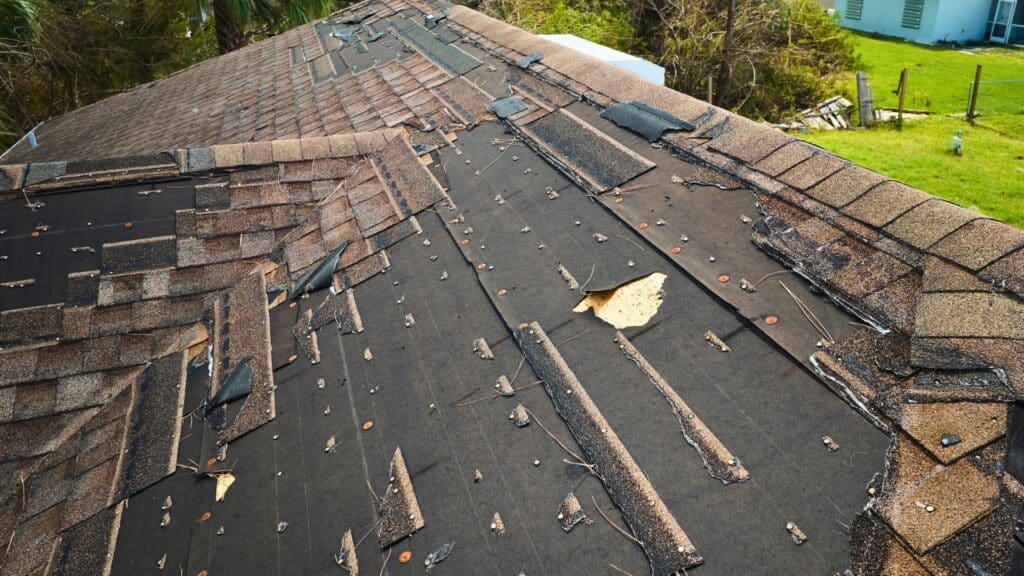
The hurricane has moved along, but the mess it left behind hasn’t. You’ve got shingles in the yard, a questionable
Posted on Google
 Ron Moseley2 days ago
Trustindex verifies that the original source of the review is Google.
The overall experience was excellent and the work was done on time!Posted on Google Jack Gaetano2 days agoThey did a great job. Cleaned up excellently as well. It was a pleasure to work with them. Gutters are great and chimney repair too.Posted on Google
 Pat Broghamer4 days agoMy roof had some wind damage to the starter layer and Willow Ash came out and repaired it. Great communication and professionals. I highly recommend them.Posted on Google
 John Waites23 days agoAdam was excellent, knowledgeable and very helpful in addressing a bigger roof problem than we expected. I felt that he and his crew really went the extra mile to help us. I would highly recommend him and Willow Ash Roofing!Posted on Google
 andrew fry27 days agoWillow Ash Roofing does a great job. They are professional, consultative, thorough, and great at follow up. Adam is customer focused and friendly. Highly recommend!Posted on Google
 George Provosty48 days agoQuality work from folks who have been working in this area for a long timePosted on Google
 Elise Milbrandt73 days agoMatthew was fantastic to work with! He was professional, knowledgeable, responsive, and took the time to explain everything clearly. He made the entire roofing process easy and stress-free from start to finish. Great communication, great service, and someone you can feel confident trusting with your home. I would absolutely recommend Matthew to anyone needing roofing work.Posted on Google
 Kelly Campbell76 days agoGreat experience. Fixed the leak issue we had, inspected the roof for wear and tear or other issues (none found), and installed gutters to help with drainage issue. Very punctual and professionalPosted on Google
 Jayne Martinage76 days agoWe had a great experience working with Willow Ash. They were extremely knowledgeable, efficient and fairly priced.Posted on Google
 Dan Phillips79 days agoWillow Ash roofing completed a metal ridge cap repair for my house. They were competitively priced, professional, navigated the complexity of my installation with ease. Fredy was great to work with and communicated well before, during, and after the installation was completed. Highly recommend Willow Ash roofing!
Let us know how to reach you, and we’ll text you right away.
Feel free to leave your contact information on our online form. A consultation is always free, and it’s the first step towards finding a roofing solution!
 Optimized by Seraphinite Accelerator