Skip to content

A nasty storm rolls through South Carolina overnight.
The next morning, you find a few shingles in the yard. There’s a water spot on the ceiling that definitely wasn’t there yesterday. Or maybe everything looks fine from the ground, but after the wind and hail you heard pummeling the house, you’re not so sure how your roof fared.
So, you start wondering if it’s time to contact your insurance company.
That can open up a whole new batch of questions. You might not know if the damage is bad enough to file a claim, what your policy will actually cover, or if you should have a roofer take a look first.
And once terms like depreciation, replacement cost, and wind deductibles start getting thrown around, things don’t exactly get clearer.
You probably didn’t plan on spending your day trying to decipher what “actual cash value” means. But if your roof has storm damage, understanding a few basics can save you a lot of confusion later.
How Roof Insurance Claims Work in South Carolina
So you found damage to your roof after a storm. That’s usually where a roof insurance claim starts.
You report the damage to your insurance company, and they open a claim. An adjuster will typically inspect the roof and review what happened and compare the damage with the coverage offered by your policy.
If the damage is covered, the insurance company puts together an estimate for what it thinks the repairs should cost.
Your roofer looks at the same damage through a different lens.
We’re figuring out what was damaged, what can be repaired, what needs to be replaced, and what it’ll actually take to do that work. We’ll document what we find and put together our own estimate.
Sometimes those two estimates line up pretty closely. Sometimes they don’t. There might be damage the adjuster missed, differences in the proposed repairs, or costs that need another look. That’s where additional documentation or a revised estimate may come into the picture.
Once the scope is settled, the work can move forward. What you pay and what your insurance company pays will depend on the specifics of your policy, including your deductible and how your roof is covered.

What Types of Roof Damage Does Homeowners Insurance Usually Cover?
Homeowners insurance is typically meant for damage that happens suddenly, rather than problems that have been stewing for years. For your roof, that often means the question isn’t just “Is it damaged?” it’s “What damaged it?”
Depending on the policy, covered roof damage can include damage caused by wind, hail, falling trees, or other storm-related debris.
Exactly what’s covered comes back to your individual policy, though, especially in coastal areas where wind and hurricane coverage can work a little differently.
Wind Damage
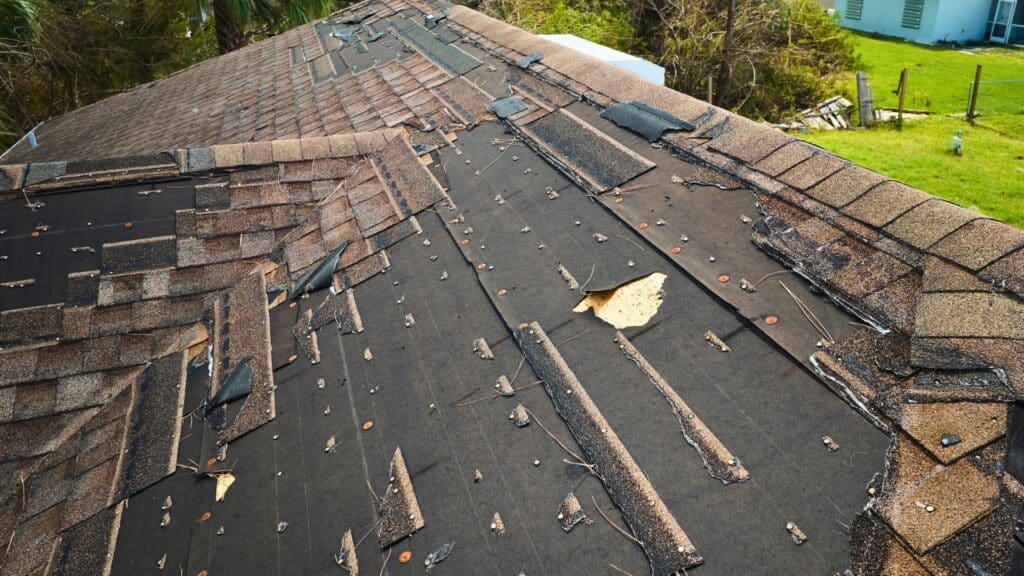
South Carolina roofs are no stranger to high winds, especially during hurricane and tropical storm season. Wind gusts can exceed 100 mph in some of these storms. That kind of wind can tear shingles off completely, damage flashing, and send branches or other debris into the roof.
Missing shingles are easy to see, but lifted or creased shingles can be harder to spot.
Hail Damage
Hail can knock granules loose from asphalt shingles, leave dents or impact marks, and damage vents, flashing, gutters, and other metal components around the roof.
Sometimes the first clues show up somewhere other than the shingles, though. If your gutters and downspouts are sporting some new dents and dings, it’s probably not a bad idea to have the roof inspected.
Fallen Trees and Debris
It’s not uncommon for branches, limbs, and other debris to hitch a ride on whistling winds. When that happens, that debris might find itself relocated to your roof. Depending on your policy and what caused the tree or debris to fall, insurance might cover the necessary roof repairs.
Tree removal gets a little more complicated. Coverage can depend on where the tree landed, what it damaged, and the terms of your policy.
Water Damage After a Storm
If wind tears away shingles and rain gets inside, the resulting water damage may be part of the same covered loss. That could include damage to ceilings, walls, insulation, and other parts of your home.
Now, things get a bit tricky with a leak that has been around for a while.
Water getting through a roof that has been deteriorating for months or years may be treated differently than water that came in because last night’s storm absconded with a section of shingles.

What Roof Damage Usually Isn’t Covered?
Homeowners insurance generally won’t pay for a new roof simply because the one you have is getting old or needs maintenance. If the problem developed gradually rather than during a covered event, there’s a good chance the repair will fall to you.
Some common examples of uncovered issues include:
- Normal Wear and Tear: Shingles lose granules, seals weaken, and roofing materials deteriorate with age (especially with exposure to salt air). Insurance typically doesn’t cover a roof that has simply reached the end of its useful life.
- Neglected Maintenance: A small problem that goes unaddressed can turn into a much bigger one. If a leak has been letting water in for months, your insurer may not cover damage that could’ve been prevented with reasonable maintenance.
- Pre-Existing Damage: Damage that was already there before the storm generally won’t become covered just because you file a claim afterward.
- Poor Workmanship or Installation: Problems caused by an improperly installed roof may be excluded, depending on the policy. That could include leaks or premature failure tied back to the original installation.
An older roof can still suffer new storm damage, though. If wind tears shingles off a 15-year-old roof, the insurer will look at what the storm actually damaged along with the coverage you have. The roof’s age may affect how the claim is paid (more on that soon).
How Your Roof Insurance Coverage Affects What You’ll Pay
You and your neighbor might have pretty similar storm damage and end up with very different insurance payouts. That’s often because of the little nuances in coverage details in each individual policy.
Before you file a claim, take a peek at your declarations page and look at how your roof is covered, what deductible applies, and how depreciation is handled. Those details can make a noticeable difference in what ultimately comes out of your pocket.
Replacement Cost Value (RCV) vs. Actual Cash Value (ACV)
Replacement cost value (RCV) coverage is based on what it costs to repair or replace your damaged roof with comparable materials, without subtracting for age and wear.
Actual cash value (ACV) accounts for depreciation, so the age and condition of your roof are factored into the claim payment. If you have an older roof, that difference can add up quickly.
How Roof Age Can Affect Coverage
The older your roof gets, the more closely you’ll want to look at your policy. Some insurers change how a roof is covered once it reaches a certain age, such as moving it from replacement cost to actual cash value coverage.
But that doesn’t mean an older roof can’t have covered storm damage. It means the age of your roof might affect how your insurer calculates what it owes after a covered loss.
Wind, Hail, and Named-Storm Deductibles
Don’t assume the deductible you normally think of is the one that will apply to roof damage.
South Carolina policies can have separate deductibles for wind, hail, or named storms, and some are calculated as a percentage of your home’s insured value or policy limit rather than a flat dollar amount.
That percentage can get expensive fast. Let’s say your home is insured for $400,000 and your applicable deductible is 2%. In that situation, you’d be responsible for the first $8,000 of the covered loss.
Depreciation and Recoverable Depreciation
If you have replacement cost coverage, you might not get the entire claim payment in one check. Your insurer may initially subtract depreciation based on the roof’s age and condition.
Some policies allow that depreciation to be recovered after the work is completed and the required documentation is submitted. That’s called recoverable depreciation. Your claim paperwork should show what was withheld and what you need to do to get any remaining payment.

What to Do After a Storm Damages Your Roof
Once the storm has passed, you don’t need to figure out the whole insurance claim that day. Here’s what to do:
1. Stay Off Your Roof, but Check for Damage
Take a stroll around your property once it’s safe to go outside, but keep your feet firmly planted on the ground. Wet roofing, loose shingles, fallen branches, and storm-damaged structures aren’t worth climbing up to investigate yourself.
Look for damage you can safely spot from below, such as missing shingles, pieces of roofing in the yard, damaged gutters, fallen limbs, or debris on the roof.
Inside, check ceilings and walls for new water spots and look in the attic for signs of a leak (wet insulation, musty odor, and so on) if you can access it safely.
2. Document What You Find
Grab your phone and take pictures or videos of anything that looks new after the storm. Get wide shots that show where the damage is, along with closer photos when you can take them safely.
Keep track of the date of the storm, too. If you end up filing a claim later, having a record of what you noticed and when you noticed it can be helpful.
3. Prevent Additional Damage
If water is getting into the house, don’t leave it dripping while you wait for an adjuster. Your insurance policy may require you to take reasonable steps to keep the damage from getting worse.
That could mean having the roof temporarily tarped, moving belongings away from a leak, or catching water before it damages more of the room. Keep receipts for any emergency work or materials you pay for.
4. Review Your Insurance Policy
This is a good time to pull out your policy and declarations page. Check your roof coverage, deductible, and any separate wind, hail, hurricane, or named-storm deductible that could apply.
If there’s something in there that you’re unclear about, give your insurance company a call and ask what that means for your coverage.
5. Have the Roof Professionally Inspected
A roofing inspection can tell you what’s actually going on up there. We can look for storm damage, document what we find, and determine what needs to be repaired or replaced.
That information can help you decide what to do next, especially when there’s no obvious hole in the roof but you suspect the storm caused damage.
6. Report the Claim to Your Insurance Company
If you decide to file a claim, contact your insurer and report what happened. They’ll open the claim and give you a claim number. They’ll also tell you what comes next, which will usually include assigning an adjuster.
Keep that claim number handy and start saving the paperwork, emails, estimates, photos, and receipts connected to the loss in one place. You might need to refer back to them multiple times after you actually file the claim before the roof is finished.
What Happens If the Insurance Adjuster and Roofer Disagree?
Your roofer’s estimate and the insurance company’s estimate might not match the first time around. The adjuster might’ve left out a damaged section of flashing, your roofer may find additional damage during the inspection, or the two estimates may account for the work differently.
That doesn’t necessarily mean your claim has hit a brick wall. We can document the roofing work we believe is needed and provide estimates, photos, or other supporting information for the insurance company to review.
If your roofer and insurance adjuster disagree about the damage or cost of repairs, you might need a revised estimate, a supplement, or another inspection.
Choosing a Roofer for an Insurance Claim
After a big storm, you probably won’t have any shortage of roofers willing to take a look at your house. The kicker is figuring out who you actually want to do the work, especially when an insurance claim is involved.
Here’s what to check before you hire a roofing contractor:
- Local Experience: Look for a roofer with an established presence in your area rather than a crew that just rolled into South Carolina after the latest storm.
- Proper Licensing and Insurance: Ask about the contractor’s credentials and insurance before anyone starts working on your roof.
- A Thorough Roof Inspection: Your roofer should be able to show you what they found and explain what needs attention without making every scuffed shingle sound like a dire emergency.
- Clear Documentation: Photos, measurements, and a detailed estimate give you and your insurance company a much clearer picture of the work your roof needs.
- Experience with Insurance-Related Repairs: A roofer who regularly handles storm damage should understand the documentation insurers may request and how supplements work if additional roofing work is discovered.
- No Promises About Coverage: Be wary of anyone who guarantees that insurance will buy you a new roof. Your roofer can document the damage and explain the repairs; your insurance company decides what your policy will actually cover.
You’re trusting this company with a pretty major part of your home, so it’s fair to ask questions before signing anything. A good roofer should be willing to explain what they found, what they recommend, and what their role will be as the claim moves along.

Avoid These Roof Insurance Claim Mistakes
A roof claim already comes with enough paperwork and moving parts. A few missteps can make things harder than they need to be, especially if damage isn’t documented well or you mistakenly think you have specific coverage before checking the policy.
So, here’s what to avoid doing (and what to do instead):
| Don’t Do This | Do This Instead |
| Climb onto the roof to check for damage yourself. Storm-damaged roofing can be loose, wet, or unstable. | Start with what you can safely see from the ground. Take photos and have a roofer handle the up-close inspection. |
| Wait weeks to deal with suspected storm damage. A small opening can give rain plenty of time to cause more trouble inside. | Have the roof checked sooner rather than later. If there’s damage, you’ll know what you’re dealing with and can protect your house while you wait on insurance. |
| Make permanent repairs before documenting the damage. That can make it harder to show what the storm actually did. | Take photos and save records first. If emergency work is needed, keep the receipts and documentation. |
| Assume insurance will pay for a new roof. Storm damage doesn’t automatically mean the entire roof qualifies for replacement. | Wait until the damage and your coverage have been reviewed. Your roofer can explain what the roof needs, and your insurer determines what the policy covers. |
| Assume you know what your deductible is. Storm-related damage can come with a different deductible than other claims. | Check your policy before filing. Look for any separate percentage-based deductible that could apply to the loss. |
| Hire the first roofer who shows up after the storm. A major storm can bring out-of-town crews into the area quickly. | Take a little time to vet the contractor. Check their credentials, local presence, insurance, reviews, and experience with storm-damaged roofs. |
| Throw away receipts, estimates, or claim paperwork. You may need those records again as the claim moves along. | Keep everything together. Save photos, receipts, estimates, emails, and insurance paperwork until the claim and roofing work are done. |
Frequently Asked Questions
Roof insurance claims can get pretty specific once you get into your roof, your policy, and the damage you’re dealing with. Here are answers to a few of the questions we often get about these claims.
How much does roof replacement cost in South Carolina?
A roof replacement in South Carolina costs between $6,100 and $19,000, with many homeowners paying right around $7,700. Costs can vary based on the size of your roof, the roofing material you choose, labor, and whether your insurance covers all or part of it.
Should I get a roof inspection before filing an insurance claim?
It’s a good idea, especially if you’re not sure how much damage the storm caused. A professional inspection can help pinpoint and document the damage so you know what you’re dealing with before you file a claim.
How long do I have to file a roof insurance claim in South Carolina?
The deadline depends on your insurance policy, so check its claim-reporting requirements. Ideally, you should report the damage as soon as possible, since waiting too long could make it harder to connect the damage to a particular storm.
Will insurance replace my whole roof if only part is damaged?
That depends on the extent of the covered damage and the terms of your policy. Your insurer may approve a repair or full replacement based on what’s needed to address the covered loss.
Will homeowners insurance cover an old roof?
An older roof can still have coverage for new storm damage, but its age may affect how the claim is paid. Some insurers use actual cash value coverage or place restrictions on older roofs.
What happens if my roof replacement costs more than the insurance estimate?
In this case, your roofer may submit additional documentation or a supplement if covered work is missing from the insurer’s estimate or they find more damage. The insurance company will review the additional costs and figure out what the policy covers.
What should I do if my roof insurance claim is denied?
Read the denial letter to find out why the claim wasn’t approved. If you think covered damage was missed, ask your insurer about its review or dispute process and provide any additional documentation that supports your claim.
Get Help With Your South Carolina Roof Insurance Claim
Roof damage is stressful enough without trying to make sense of every estimate, photo, and line of insurance paperwork on your own. If your home has been hit by a storm, we can help.

Willow Ash Roofing has helped homeowners in the Greater Charleston area deal with storm-damaged roofs and insurance claims for years. Contact us today to schedule your roof inspection and find out what your roof needs.
Sources & References
- North Carolina Department of Insurance — Actual Cash Value vs. Replacement Cost Value
Explains the difference between actual cash value and replacement cost value coverage, including how depreciation affects claim payments.
https://www.ncdoi.gov/consumers/homeowners-insurance/actual-cash-value-vs-replacement-cost-value - Progressive — Does Home Insurance Cover Roof Damage?
Explains when homeowners insurance may cover roof damage and how coverage can differ for storm damage, wear and tear, and other causes.
https://www.progressive.com/answers/does-home-insurance-cover-roof-damage - South Carolina Department of Insurance — Understanding Basic Homeowners Insurance
Provides information about homeowners insurance coverage in South Carolina, including coverage for the home and damage caused by events such as hurricanes and hail.
https://doi.sc.gov/963/Understanding-Basic-Homeowners-Insurance - South Carolina Department of Natural Resources — Hurricanes and Tropical Storms
Provides historical information about hurricanes and tropical storms affecting South Carolina and the hazards associated with these storms.
https://www.dnr.sc.gov/climate/sco/hurricanes - This Old House — How Much Does Roof Replacement Cost in South Carolina?
Provides South Carolina roof replacement cost estimates and explains factors that can affect the final project price.
https://www.thisoldhouse.com/roofing/roof-replacement-cost-south-carolina